

As a seasoned supplier of block board and plywood, I've witnessed firsthand the ongoing debate among builders, contractors, and DIY enthusiasts: which is stronger, block board or plywood? This is a question that doesn't have a one - size - fits - all answer, as the strength of each material depends on various factors. In this blog, I'll delve into the characteristics of both block board and plywood, compare their strengths, and help you make an informed decision for your next project.
Understanding Block Board
Block board, also known as laminated board, is a composite wood product. It consists of a core made up of wooden strips or blocks that are usually glued together between two veneer sheets. The core strips are typically arranged parallel to each other, providing a certain degree of structural integrity.

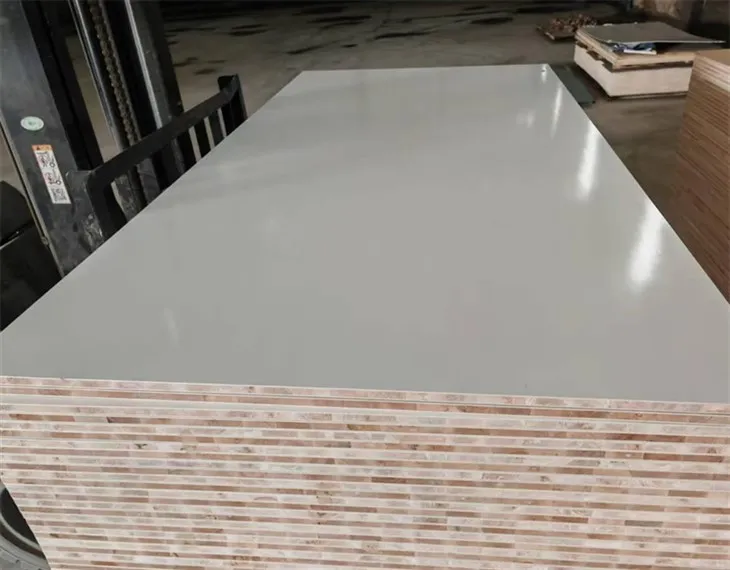
One of the key advantages of block board is its dimensional stability. The parallel arrangement of the core strips helps to resist warping and twisting, making it a great choice for applications where maintaining a flat surface is crucial. For example, it is commonly used in furniture making, such as cabinets and wardrobes. You can check out our Pine Sandwich Block Board, which offers excellent stability and a natural pine look.
The strength of block board mainly comes from its core. The wooden blocks in the core distribute the load evenly across the board. However, the strength can vary depending on the type of wood used for the core, the quality of the glue, and the thickness of the veneers. If high - quality wood and strong adhesives are used, block board can withstand a significant amount of weight and stress.
Understanding Plywood
Plywood is another well - known engineered wood product. It is made by gluing together multiple thin layers of wood veneer, with the grain of each layer oriented perpendicular to the adjacent layers. This cross - grain construction gives plywood its unique properties.
The cross - grain structure of plywood is its most significant strength. It provides excellent strength in both directions, making it highly resistant to cracking, splitting, and warping. Plywood can handle heavy loads and is often used in construction projects, such as flooring, roofing, and wall sheathing.
The number of layers in plywood also affects its strength. Generally, the more layers a plywood sheet has, the stronger it is. Additionally, the type of wood used for the veneers and the quality of the adhesive play important roles in determining the overall strength of the plywood.
Comparing the Strengths
Structural Strength
In terms of structural strength, plywood has an edge over block board. The cross - grain construction of plywood allows it to distribute stress more evenly in all directions. This means that plywood can better withstand bending, twisting, and impact forces. For example, in a construction project where a board needs to support a heavy load or resist strong winds, plywood would be the preferred choice.
Block board, on the other hand, has a more one - dimensional strength. Since the core strips are arranged parallel to each other, it is stronger in the direction parallel to the strips. However, it may be more prone to damage when the load is applied perpendicular to the strips.
Dimensional Stability
Both block board and plywood offer good dimensional stability, but in different ways. Block board's parallel core strips help it maintain its shape and resist warping, especially when used in furniture applications where a flat surface is required.
Plywood's cross - grain construction also provides excellent dimensional stability. It is less likely to expand or contract with changes in humidity and temperature compared to solid wood. This makes plywood a reliable choice for outdoor applications or areas with fluctuating environmental conditions.
Impact Resistance
Plywood generally has better impact resistance than block board. The multiple layers of veneer in plywood work together to absorb and disperse the energy of an impact. This makes it suitable for applications where the board may be subjected to accidental bumps or knocks, such as in a workshop or a high - traffic area.
Block board may be more vulnerable to impact damage, especially if the impact occurs perpendicular to the core strips. However, if the block board is well - made with high - quality materials, it can still provide a reasonable level of impact resistance.
Applications Based on Strength
Block Board Applications
Due to its good dimensional stability and one - dimensional strength, block board is ideal for furniture making. It is commonly used for interior furniture, such as desks, tables, and shelves. Our Solid Color Paper Furniture Block Board is specifically designed for furniture applications, offering a smooth finish and sufficient strength to support the weight of items placed on the furniture.
Block board is also used in some interior decoration projects, such as wall paneling. Its flat surface and relatively lightweight make it easy to install and work with.
Plywood Applications
Plywood's superior strength and dimensional stability make it suitable for a wide range of construction applications. It is used as sub - flooring to provide a stable base for the final flooring material. Plywood is also commonly used in roofing to provide a strong and durable surface that can withstand the elements.
In addition, plywood is used in the manufacturing of shipping crates and pallets. Its ability to handle heavy loads and resist impact makes it an ideal choice for transporting goods.
Other Factors to Consider
Cost
Cost is an important factor when choosing between block board and plywood. Generally, block board is more affordable than plywood, especially if you are using it for furniture making or interior decoration projects. However, the cost can vary depending on the quality and thickness of the boards.
Appearance
The appearance of the board may also influence your decision. Block board often has a more rustic look, especially if the natural wood grain of the core is visible. Plywood can have a smoother and more uniform appearance, depending on the type of veneer used. Our Melamine Faced Back Block Board offers a smooth and durable finish, which can enhance the aesthetic appeal of your project.
Workability
Both block board and plywood are relatively easy to work with. They can be cut, drilled, and nailed using standard woodworking tools. However, block board may be a bit easier to cut and shape due to its less complex structure.
Conclusion
In conclusion, the question of which is stronger, block board or plywood, depends on the specific requirements of your project. If you need a board with excellent structural strength, impact resistance, and all - around performance, plywood is the better choice. It is suitable for construction projects and applications where the board will be subjected to heavy loads and harsh conditions.
On the other hand, if you are looking for a board with good dimensional stability and a more affordable option for furniture making or interior decoration, block board may be the right choice for you.
As a block board and plywood supplier, I can offer you a wide range of high - quality products to meet your needs. Whether you are a professional builder or a DIY enthusiast, I'm here to help you make the best decision for your project. If you have any questions or would like to discuss your requirements, please feel free to contact me for procurement and further discussions.
References
- Wood Handbook: Wood as an Engineering Material, Forest Products Laboratory
- Engineered Wood Products: A Guide for Design and Construction, American Wood Council


